1. What is the significance of the Negotiable Cargo Document?
The UN Convention on Negotiable Cargo Documents (NCD) introduces the first international legal framework for negotiable cargo documents across all modes of transport. The principle behind the NCD is not new. Through the Bill of Lading, it is particularly well known in maritime transport. The so-called negotiable document (see information box) is relevant for transactions in which goods are sold, financed or used as security while they are still in transit – without having to be removed from the transport process.
For example: a trader purchases goods worth one million euros that are already on their way from Asia to Europe. To secure the payment and finance the purchase price, they take out a so-called letter of credit (L/C) with a bank. The negotiable document, in most cases a Bill of Lading, is handed over to the bank as security. This gives the bank control over the goods. This is the core function of negotiable documents as documents of title. If the trader repays the loan as agreed, the bank releases the document or the corresponding rights to the goods.
The principle of the Bill of Lading can now be applied beyond maritime transport through the NCD Convention. In 2020, following an initiative by China, the United Nations Commission on International Trade Law (UNCITRAL) began work on a negotiable transport document capable of accompanying goods across several modes of transport and thus being used in multimodal transport chains.
The need for this had become apparent as overland transport between Asia and Europe, for example along the New Silk Road, grew in importance. In December 2025, the UN General Assembly adopted the NCD Convention. In 2026, the framework was opened for signature in Ghana‘s capital, Accra – hence the name Accra Convention. Following signature, at least ten states must ratify the framework under their respective national procedures or accede to it before it can enter into force. This, however, is only a matter of time.
2. Why is this relevant to logistics?
At first glance, the Negotiable Cargo Document may seem primarily relevant to traders, exporters, importers and banks. After all, these are the parties involved in selling, purchasing or financing goods while they are in transit. This may also explain why the Accra Convention received relatively little attention in traditional logistics media. Behind the scenes, however, relevant logistics organisations are already looking at the framework and its implications.
Because the document must function along the entire transport chain, logistics is also part of the equation. Questions such as “Who issues the document?”, “Who may transfer it?”, “How is it verified who is currently entitled to it?”, “How is the transfer documented?” and “How is it established upon delivery who is entitled to claim the goods?” are also important considerations for carriers, freight forwarders and terminal operators involved in transporting and handling the goods and managing the associated transport data.
The questions become particularly relevant if the document is to be managed entirely electronically in future. In that case, simply making the information available in digital form is not enough. The transfer of associated rights must also function in a legally secure manner. The Accra Convention does not treat the NCD merely as a paper document; it expressly takes its electronic form into account from the outset. The Convention also sets out specific provisions for an electronic Negotiable Cargo Document (eNCD), including requirements concerning its content and electronic signature.
Difference between NCD and CMR
Transport documents such as the NCD or Bill of Lading are legally documents of title: the mere handing over of the document, rather than the goods described in it, can alter the status of possession and property rights. In other words, possession of the document establishes a right to delivery. Such documents are also referred to as negotiable documents. A conventional consignment note such as the CMR, by contrast, is not a document of title. It merely documents the contract of carriage, the taking over of the goods and their delivery. Title to the goods cannot be transferred by means of the consignment note. Thus, for example, the consignee is entitled to delivery even without presenting the consignment note.
3. Why is the Open Logistics Foundation concerned with this?
A common legal framework requires a common technical basis. The legal significance of the Accra Convention is comparable with that of the CMR Convention for the consignment note or the eCMR Additional Protocol. In other words, while the legal basis has been harmonised internationally,
the technical implementation has not.
The NCD Convention, like the eCMR Convention, leaves open details regarding how an eNCD can be technically implemented, exchanged between companies and integrated into existing systems. This creates the risk that, at the technical level, the very barriers that the common legal framework is intended to overcome will re-emerge. Interoperability therefore becomes a prerequisite for the cross-modal approach of the NCD to work in practice.
The Open Logistics Foundation therefore also promotes the use of open technical standards and reusable components for the eNCD. These make it possible for new applications to connect to a common digital framework without companies having to build their own individual (siloed) solutions. For this reason, the team at the Open Logistics Foundation’s Head Office is already keeping the provisions of the Accra Convention in view and examining their legal and technical implications. This also includes monitoring when individual states ratify or accede to the Convention and how this affects the need for further action.
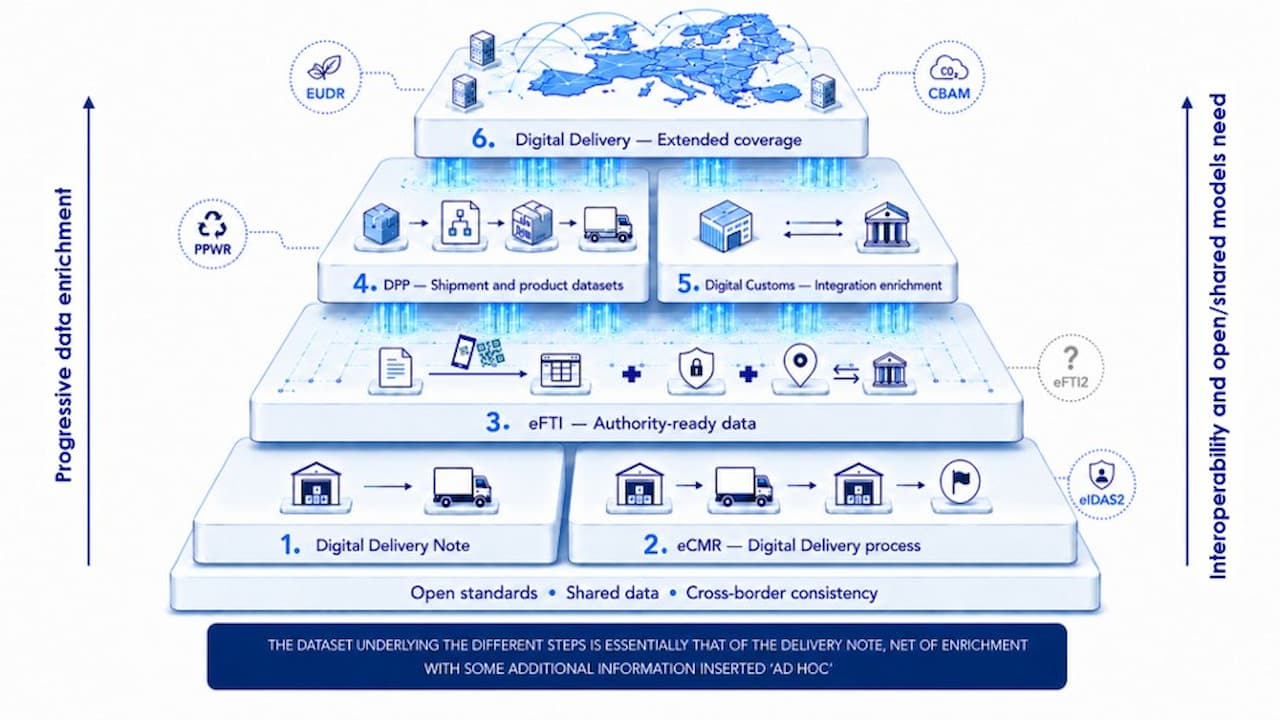
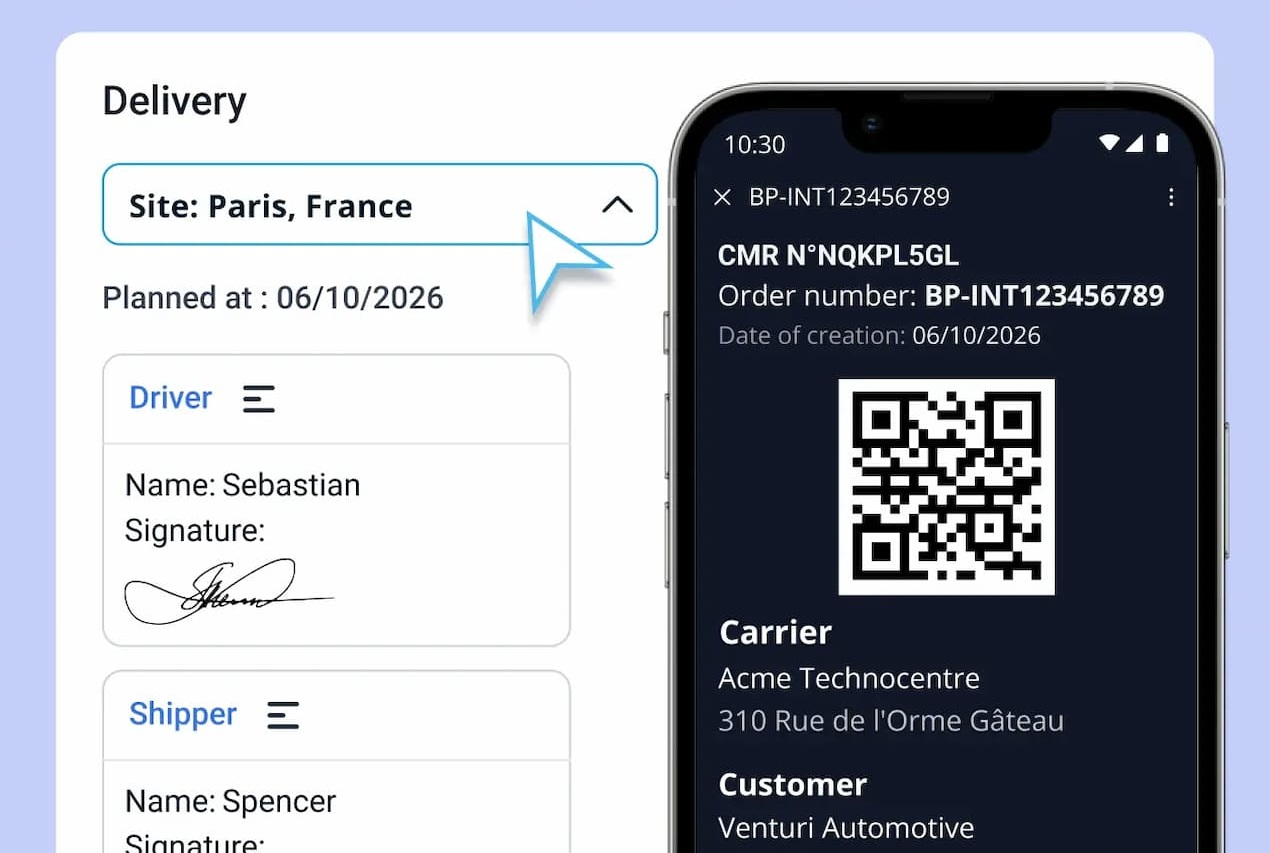
The findings are made available to member companies and can therefore feed into the work of the relevant Working Groups and projects. In concrete terms, the Accra Convention opens a prospect for the further development of the OLF-eCMR Toolbox for the digital consignment note: the existing data model could be expanded to include the information and functions required for an eNCD. This would make the digital consignment note compatible with an additional use case and could turn it into a “Transport Document Plus”.
With the NCD, however, the transport documents of other modes of transport are once again coming into focus for the Open Logistics Foundation. Other digital transport documents could likewise be enhanced with additional functions and interoperably connected on a common technical basis. Companies from the rail, air freight and port logistics sectors are therefore already invited to contribute their requirements and experience at an early stage within the
Open Logistics Foundation and to work together with other stakeholders on open, interoperable components for digital “Transport Documents Plus”.