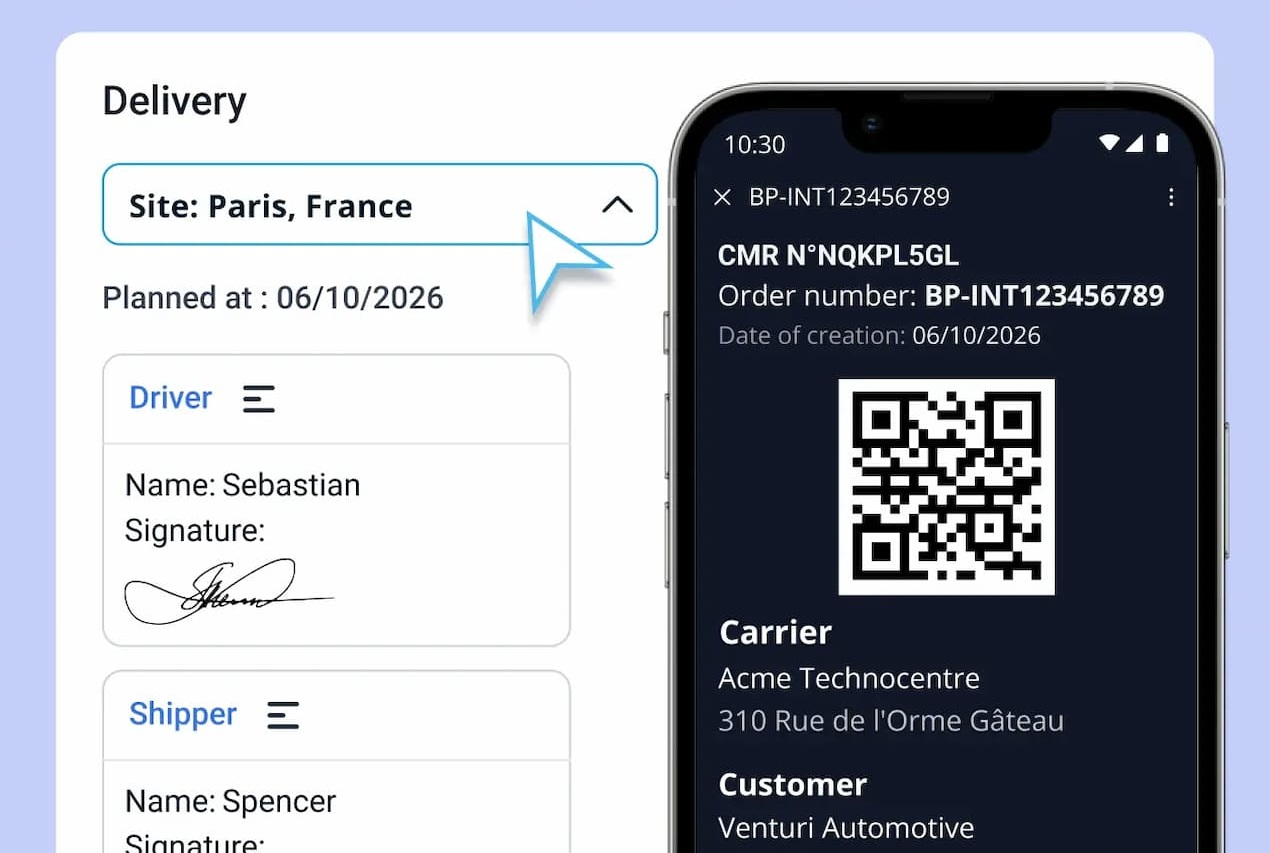
Picture a single freight shipment. The shipper books it through their TMS. The carrier manages it through their own platform. The consignee handles receipt in a warehouse system that neither of the others has ever connected to. Three parties, three platforms, one document that needs to be legally valid, digitally signed, and mutually accessible to all of them. It is a challenge that comes up in almost every conversation with shippers and carriers.
As eCMR legislation comes into force across Europe, it is forcing the industry to confront choices that will shape digital freight documentation for years to come. The real opportunity goes beyond compliance, but whether it reaches the whole industry, or just a few within it, depends on the standards being set right now. Shippeo’s position is clear: the standard should belong to the industry, not to any single player within it.
More than a legal checkbox
Compliance is what is pushing the industry to change. But what you can do with eCMR once it is in place is the more important question.
When the Shippeo team visited warehouses to observe how drivers and warehouse staff complete paperwork, the inefficiencies were striking – manual data entry, paper copies, documents that took days to reach the right person. eCMR addresses this directly: less manual entry means fewer errors, proof of delivery is available immediately rather than days later, and time-to cash cycles that can stretch to 30 days with paper are significantly shortened.
Deployed across all freight flows, eCMR also creates structured data that feeds track-and-trace, powers AI analysis, and turns the CMR from a compliance document into a source of live operational intelligence. It is this broader potential that shapes Shippeo’s own eCMR solution. By connecting real-time visibility with digital documentation, every stakeholder – shipper, carrier, consignee – works from the same trusted record of what was loaded, delivered, signed and validated, with flexible participation options for every partner in the network.
Connection is essential to making eCMR work
The scenario described above — shipper, carrier, consignee, three systems — is not the exception. It is the rule.
Building Shippeo’s visibility platform meant connecting across exactly that fragmentation: carriers on hundreds of telematics systems, shippers on different TMS platforms, data in different formats. Open connectivity, not forcing everyone onto a single system, is what made it work. With eCMR, the industry has a chance to design that interoperability – the ability of platforms to exchange data seamlessly from the start, rather than recreating the same fragmentation visibility has spent years trying to solve.
If platforms operate in isolation, the digital document stops at the platform boundary and friction simply moves rather than disappears. Shippers need confidence their carriers can participate in eCMR without friction. Carriers need to know connecting to a new shipper’s workflow will not require a bespoke integration every time. Getting this right determines whether eCMR delivers on its promise.
The case for open standards
Shippeo is an active participant in the Open Logistics Foundation (OLF) because Shippeo believes the answer to this challenge is open standards – not proprietary ecosystems.
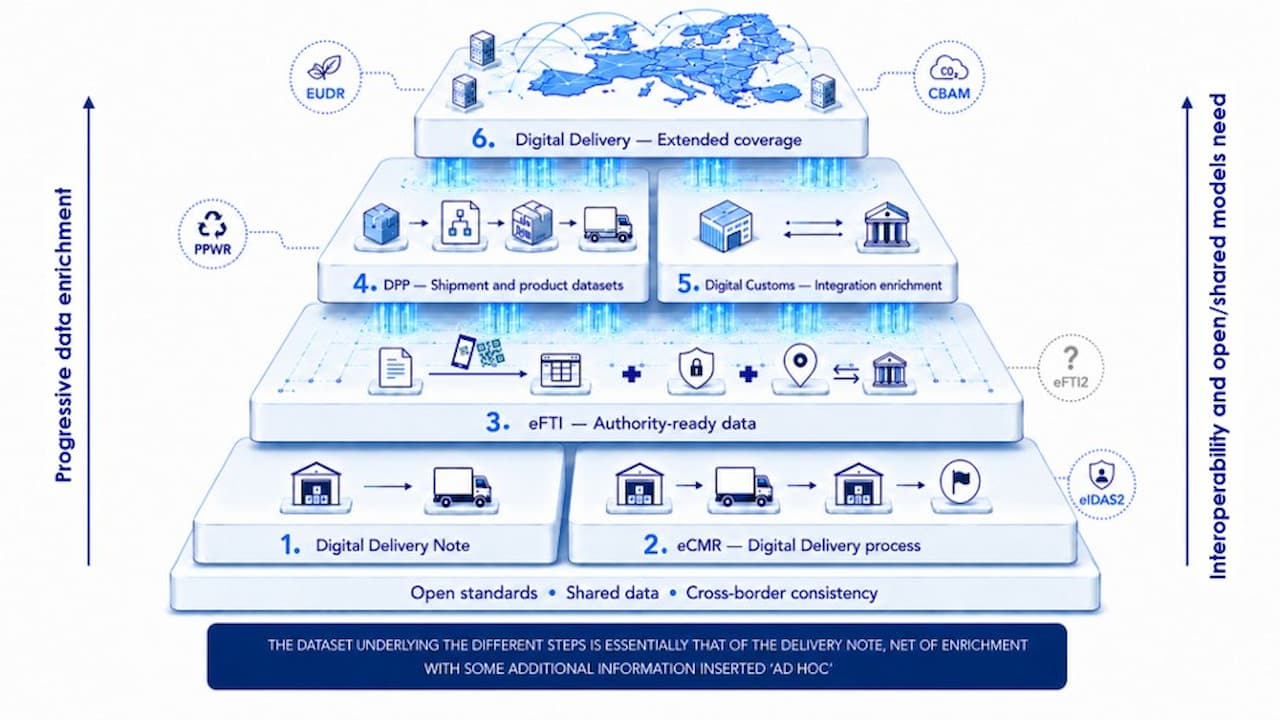
Open standards mean any compliant platform can communicate with any other. They lower the barrier for carriers to adopt eCMR, give shippers confidence their investments will not lock them into a single vendor, and create conditions for genuine competition – not over who controls the standard, but over who builds the best solutions on top of it. Shippeo believes those standards must also be cross-industry: a standard built for one segment creates fragmentation at its edges.

Learn more about the OLF-eCMR Toolbox.
The temptation to make exceptions is real. When a major customer asked Shippeo to build a custom integration outside its standard API, the team held the line. Years later, the customer acknowledged it was the right call. Standard connectors feel like a constraint in the moment – but they are what makes interoperability possible at scale. The same logic applies to carrier connectivity: connect to the tools carriers already use, their TMS and telematics, rather than imposing a proprietary mobile app. The right approach meets carriers where they are.
The risk with more closed approaches is that they shift competition away from solution quality and towards access, raising barriers that slow adoption across the board. Shippeo‘s history in real-time transportation visibility was built on openness. Shippeo believes the same path should apply to eCMR, and the work being done within the OLF must continue as more companies go live and the standard evolves to meet real-world needs.
What it will take to get there
To truly make eCMR work requires platforms to connect reliably, carriers to participate without prohibitive onboarding effort, and shippers to trust that document data flows accurately across their tools – from TMS to WMS to control tower.
eCMR’s full value will only be realised when the industry stops thinking about it as paperless compliance and starts treating it as the foundation for a connected data layer across freight – one that can power AI-driven analysis, accelerate dispute resolution, and unlock operational intelligence that paper could never deliver. Open standards are what make that data layer accessible to everyone, and what ensure the benefits of full digitalisation are shared across the industry, not concentrated within it.

About the author
Antoine Joly-Battaglini is AVP Product Platform at Shippeo, leading the platform strategy and partner integrations that underpin Shippeo’s carrier connectivity and product ecosystem. An active contributor to the Open Logistics Foundation, Antoine brings deep experience in logistics digitalisation, interoperability standards, and the practical challenges of deploying visibility technology at scale across Europe.
.
.