Small and medium-sized freight forwarders are the backbone of European logistics. Their competitive advantage no longer lies primarily in attractive freight rates, but in helping customers manage complex supply chains. Trade conflicts, sanctions, shifting sourcing patterns and geopolitical uncertainty have made information, advice and risk assessment essential parts of their services.
At the same time, digitalisation is changing market dynamics. Shippers can distribute a transport request to many providers within minutes, and artificial intelligence will make this even easier. While this improves efficiency for shippers, it increases the workload for freight forwarders, who must assess requests, secure capacity, calculate rates and evaluate risks without certainty of winning the business.
When quotation processes become a cost factor
Transaction costs are therefore increasingly important. In freight forwarding, they arise once a request is processed, whether or not it results in an order. Forwarders must handle enquiries more efficiently without compromising quality.
AI can extract and structure information from emails, portals and tenders, compare it with existing data and identify missing details. Used well, it frees time for work where forwarders add most value: consulting, negotiation, problem-solving and tailored customer solutions.
Processes before technology
For many SME forwarders, digitalisation can seem overwhelming. A sensible starting point is a strategy based on their own processes. Companies should identify where data is repeatedly entered and which activities consume most resources. This enables them to define concrete use cases.
Often, relatively simple measures are sufficient: structured capture of incoming requests, automated validation of order data, or better access to pricing and capacity information. Many such solutions are available as modular products that can be implemented quickly.
Open standards as a prerequisite for scale
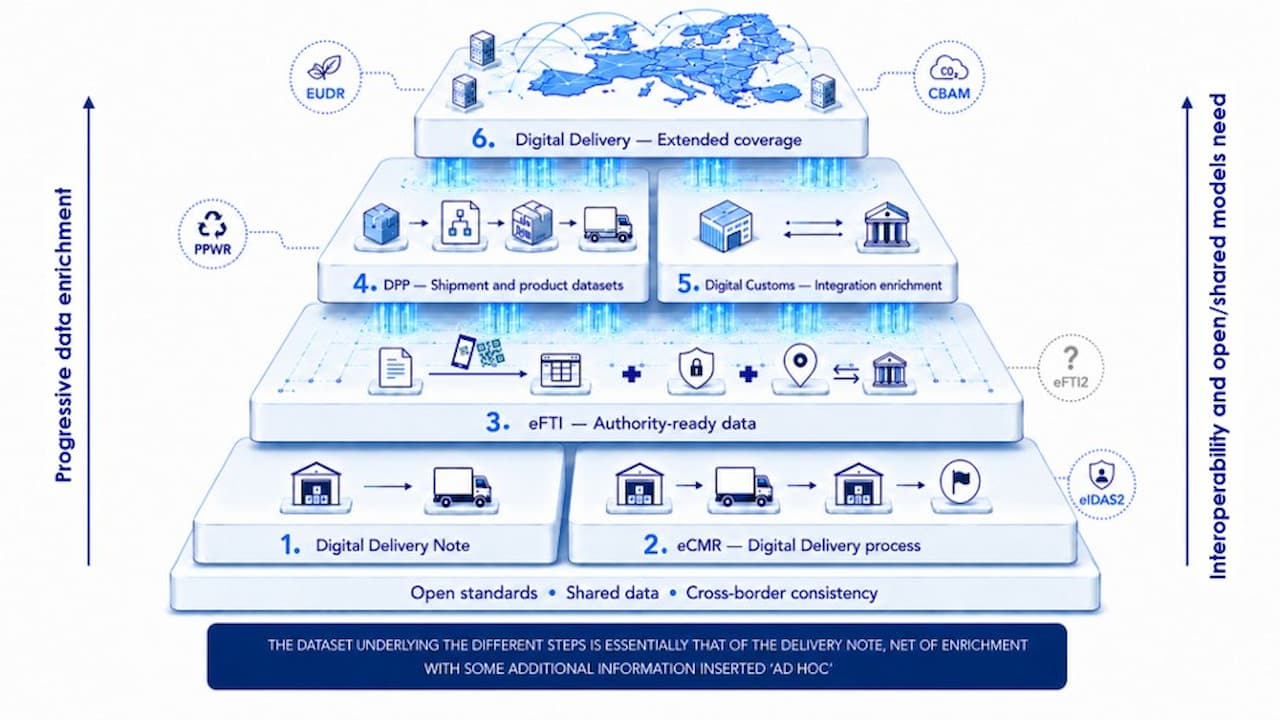
A forwarder never operates in isolation. Every shipment connects shippers, forwarders, carriers, warehouse operators, authorities and other service providers, often using different systems. Digital processes work across this chain only when systems exchange data in a form all parties understand.
Open standards provide this common language for data and processes. Shipment references, status messages and electronic transport documents then no longer require separate translation for every business partner. For SMEs, this means lower integration costs, faster onboarding and less manual effort.
Open source and data spaces strengthen digital sovereignty
Open standards must also be practical. Open-source components can provide transparent, reusable reference implementations for interfaces, data models and integration mechanisms. This benefits providers and users alike. Open technical foundations foster competition, simplify switching providers and reduce dependence on individual platforms.
Federated data spaces complement this approach. They allow companies to share data with partners in a controlled way, defining who may access it, for what purpose and for how long. This is especially important in logistics, where information on prices, customers, capacities and supply-chain relationships is
among a company’s most sensitive assets. Organisations will share such data only if transparency and control are assured.
Open standards, open source and data spaces have complementary roles: standards create common understanding, open source facilitates implementation, and data spaces enable trusted data sharing.
Digitalisation should reduce transaction costs
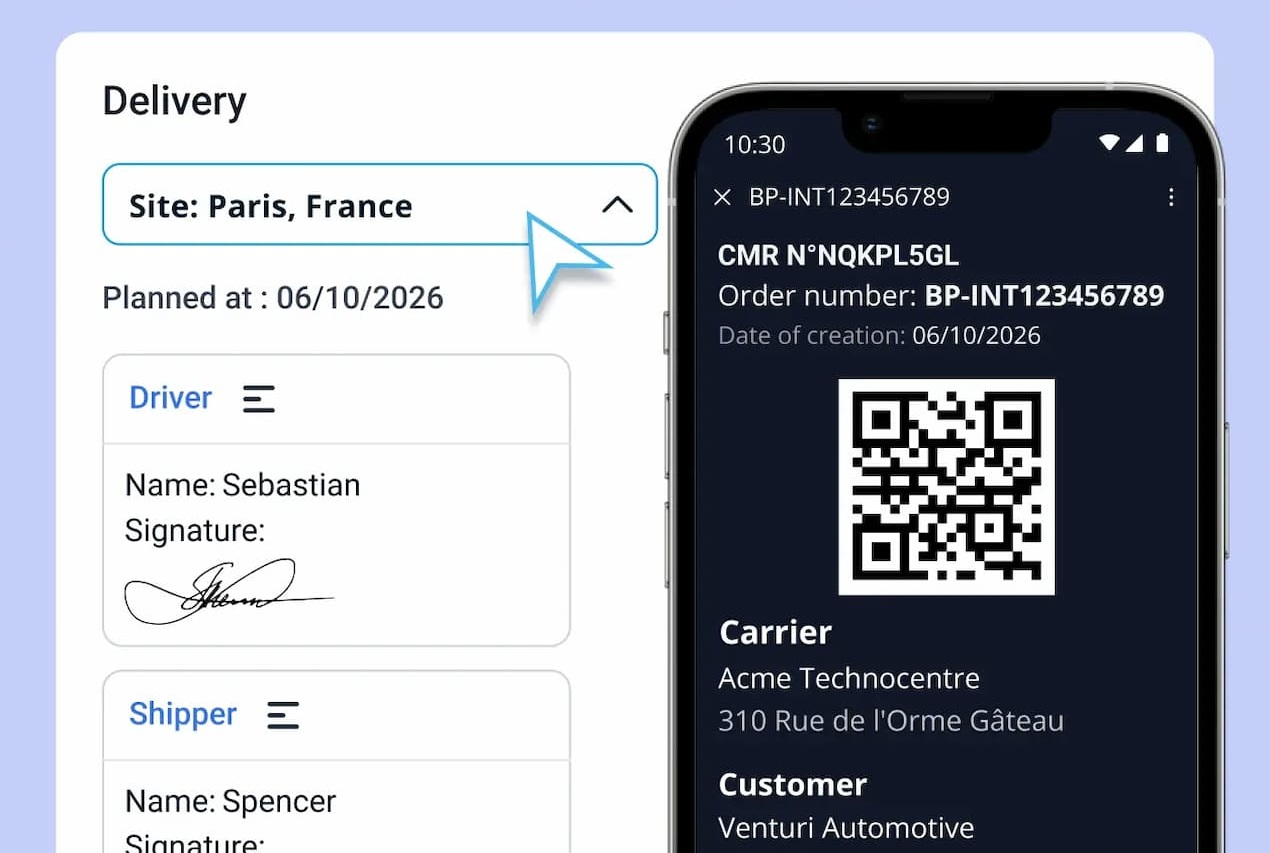
Moving away from paper should reduce the cost of information exchange. The benefit is limited, however, if a company pays a fee every time an electronic document is issued, validated or transferred. Electronic consignment notes illustrate this point. An eCMR provider may offer a convenient, transaction-based platform. This can be useful, particularly for companies without their own IT capacity. But the same function should also be capable of integration into a transport management system through agreed standards and interfaces, without additional transaction costs.

Explore the OLF-eCMR Toolbox.
A similar issue is emerging in electronic invoicing. Vendors offer services to validate whether an invoice meets the applicable standard. These services can save time and justify a commercial fee. At the same time, the European Commission provides open-source validation artefacts that can be integrated into other software. Companies with the relevant capacity can build compliance checks into their systems, while SMEs can purchase a ready-made service.
Digital sovereignty as a competitive advantage
Digitalisation in logistics will continue to accelerate. Shippers will increasingly generate requests automatically, distribute them more widely and compare offers digitally. Freight forwarders therefore need digital and AI-enabled capabilities to allocate resources efficiently and remain competitive.
These capabilities should rest on open, interoperable infrastructure. Only then can companies avoid new forms of dependency while benefiting from connected value networks. Digital sovereignty means being able to control and use data, choose providers and make independent decisions about digital business relationships. For Europe’s logistics SMEs, it is a key factor for innovation, resilience and long-term competitiveness.

About the authors
Nicolette van der Jagt is Director General of CLECAT, representing Europe’s freight forwarding, logistics and customs services sector. She is committed to practical EU policymaking that supports efficient, resilient supply chains.
Raoul Wintjes heads the International Road Freight Transport, Air Freight Forwarding and Digitalisation departments at DSLV. He connects regulatory issues with business practice, exploring how interoperable systems, shared data and connections between
people and companies can improve collaboration across the logistics sector.
.