9 December 2024 | Magazine
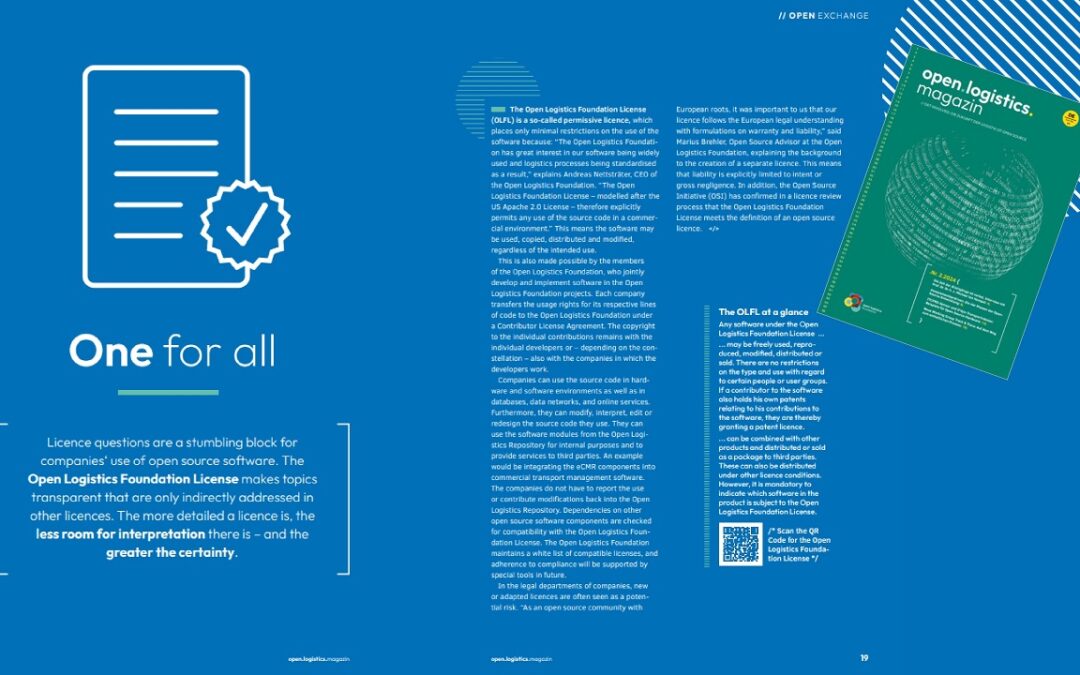
Licence questions are a stumbling block for companies’ use of open source software. The Open Logistics Foundation License makes topics transparent that are only indirectly addressed in other licences. The more detailed a licence is, the less room for interpretation there is – and the greater the certainty.

11 November 2024 | Magazine
For logistics service providers, the advantages of open source are obvious: the collaborative development of software saves costs, the software increases the user-friendliness of physical logistics and improves efficiency. Logistics IT partners, on the other hand, often fear for their market. However, open source developments offer them numerous opportunities to expand their business, retain existing customers and acquire new ones.

21 October 2024 | Magazine
Open source solutions are indispensable for greater sustainability in Logistics and Supply Chain Management. 3 questions to Andreas Nettsträter, CEO of the Open Logistics Foundation, on sustainability in logistics.

21 October 2024 | Magazine
“Zero-emission logistics“ is the logistics of the future. Open source solutions can help make logistics more efficient faster, thus contributing to achieving climate targets.
18 June 2024 | Magazine
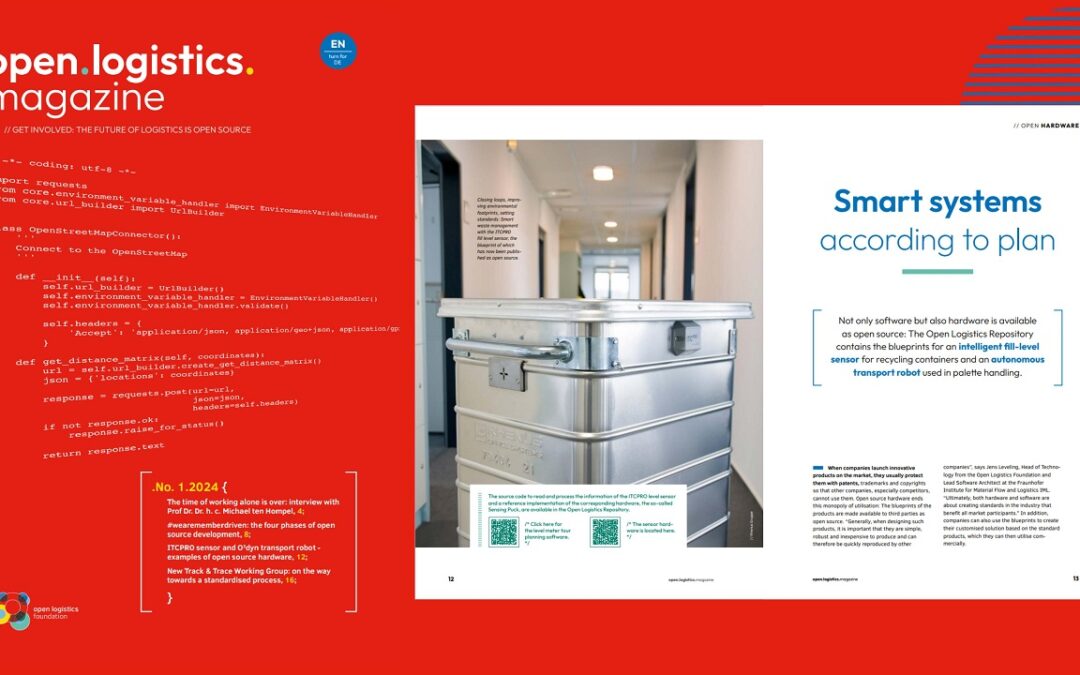
Not only software but also hardware is available as open source: The Open Logistics Repository contains the blueprints for an intelligent fill-level
sensor for recycling containers and an autonomous transport robot used in palette handling. Closing loops, improving environmental footprints, setting standards: Smart waste management with the ITCPRO fill level sensor, the blueprint of which
has now been published as open source.
13 May 2024 | Magazine
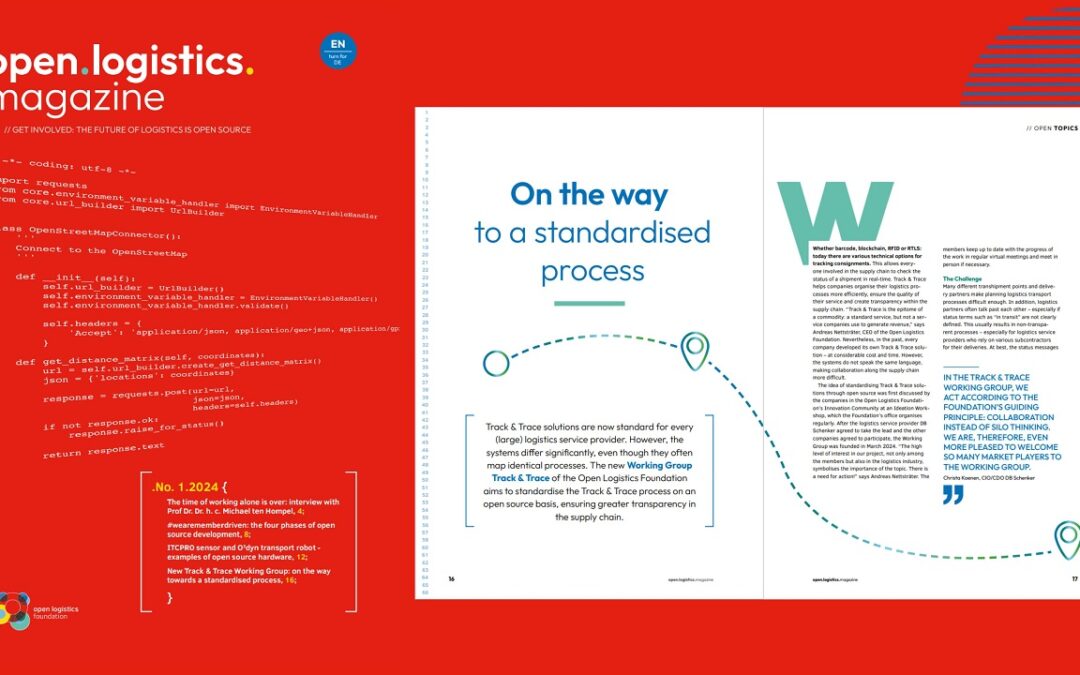
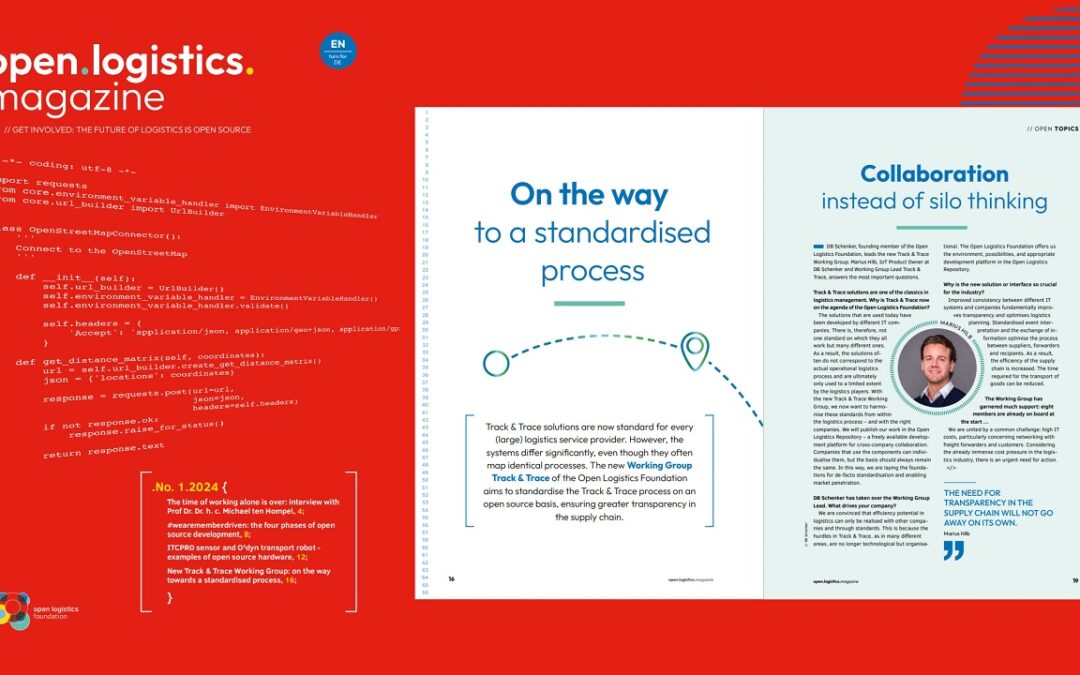
Track & Trace solutions are now standard for every (large) logistics service provider. However, the systems differ significantly, even though they often map identical processes. The new Working Group
Track & Trace of the Open Logistics Foundation aims to standardise the Track & Trace process on an open source basis, ensuring greater transparency in the supply chain.
17 April 2024 | Magazine
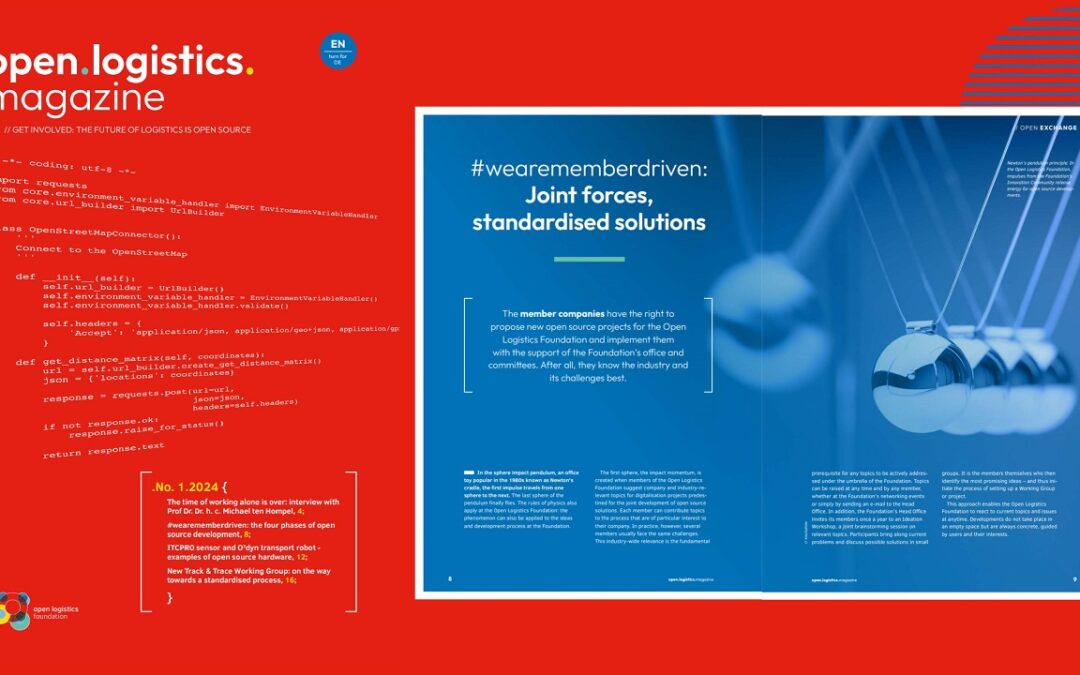
The member companies have the right to propose new open source projects for the Open Logistics Foundation and implement them
with the support of the Foundation‘s office and committees. After all, they know the industry and its challenges best.
26 March 2024 | Magazine
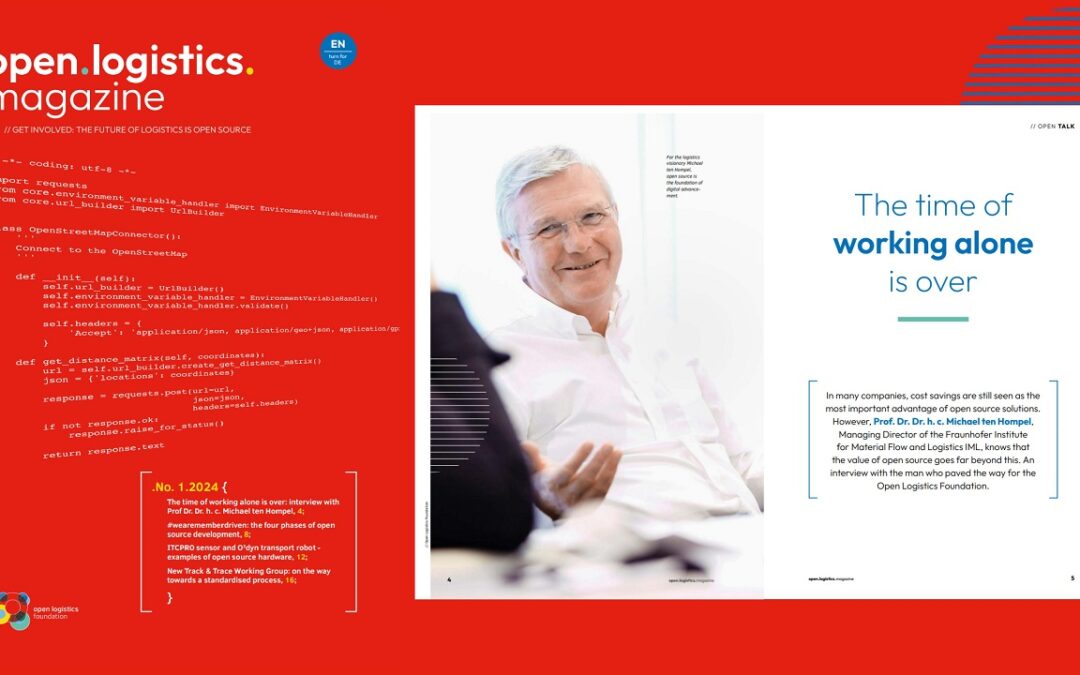
In many companies, cost savings are still seen as the most important advantage of open source solutions.
However, Prof. Dr. Dr. h. c. Michael ten Hompel, Managing Director of the Fraunhofer Institute for Material Flow and Logistics IML, knows that
the value of open source goes far beyond this. An interview with the man who paved the way for the
Open Logistics Foundation.
19 March 2024 | Magazine
DB Schenker, founding member of the Open Logistics Foundation, leads the new Track & Trace Working Group. Marius Hilb, IoT Product Owner at DB Schenker and Working Group Lead Track & Trace, answers the most important questions.
