
The new open source standard
Explore the OLF-eCMR
The OLF-eCMR provides the long-demanded and much-needed basis for the digital and efficient organisation of international goods transport. The software solution is now fully available for download as open source software in the Repository.


The OLF-eCMR is developed by member companies of the Open Logistics Foundation for the entire logistics industry.

Software benefits
From practice, for practice: Collaboration is key
More than 28 logistics service providers, transport platforms, and logistics and IT service providers worked together on the new standard – many of them companions in the industry, some with existing individual eCMR solutions. The software benefits from considering many different perspectives. The participating companies also represent numerous European countries. The benefits at a glance:

Interoperable and legally compliant

Easy installation and well-thought-out integration

Suitable for companies of any size and any sector
Inside the OLF-eCMR solution
Learn everything about the open source eCMR solution in a Spotlight Session by the Open Logistics Foundation: “Inside the OLF-eCMR solution”

Jonas Kassan
Project lead eCMR, Rhenus
»The OLF-eCMR software is just as easy to handle as the paper document.«

Ingo Müller
Project lead eCMR, Dachser
»With the OLF-eCMR we significantly reduce waiting times and enable more efficient processes.«


Introduction to the OLF eCMR solution
In this video, Jens Leveling, Technology Advisor at the Open Logistics Foundation, gives a brief introduction to the eCMR solution of the OLF and demonstrates the first steps to implement it in your internal systems.
Legally secure handover
The Open Logistics Foundation established the legal compliance of the software alongside its technical development. According to the 2008 CMR Convention (eCMR Protocol), the OLF-eCMR ensures authenticity, integrity and accessibility via secure IT systems and electronic signatures. The eCMR does not rely on the electronic signature, which would correspond to the analogue personal signature customary for consignment notes today. Instead, it relies on the advanced electronic seal. The advantage is that advanced electronic seals are not tied to natural persons but represent legal entities – companies and organisations.
Standardised transport processes that pay off
The OLF-eCMR is designed to accommodate different national requirements and can be flexibly adapted to new legal regulations. This allows for the consideration of national specificities without creating a patchwork of separate and incompatible systems.Although the EU has established a European framework for the digitalisation of transport information through the eFTI Regulation (short for electronic Freight Transport Information), individual countries can still pursue their own national approaches – as recently demonstrated in Spain.
Furthermore, European countries outside the EU may develop their own electronic solutions for freight and customs processes that could have cross-border transport implications. This underlines the need for flexible solutions capable of accommodating varied national requirements.
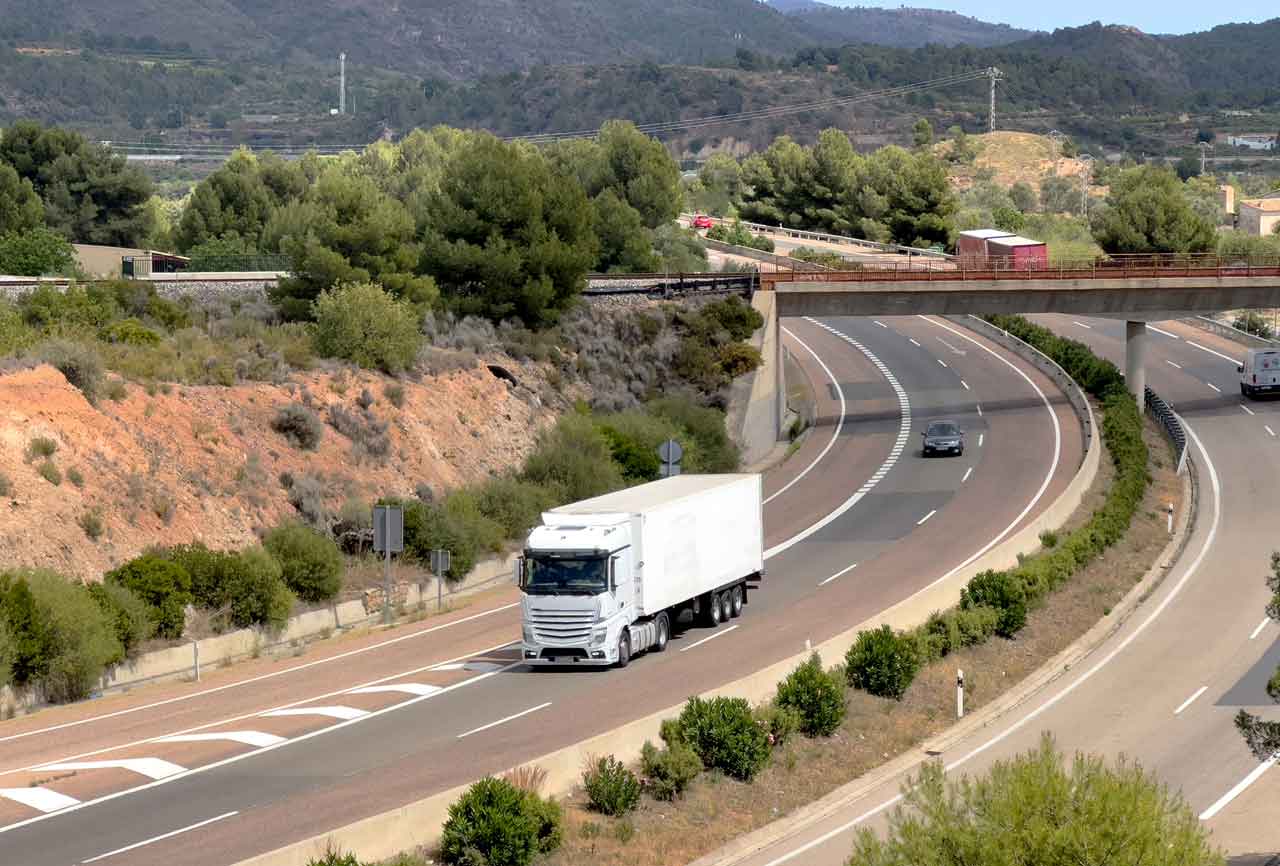
Benefits at a glance
Increasing numbers of companies are integrating the eCMR into their digitalisation strategies at an early stage and building the necessary implementation capacities. In doing so, they create the conditions needed to respond quickly to future requirements, while benefiting from tangible advantages:
More efficient
processes
Reduction of manual tasks through the elimination of paper-based consignment notes and faster digital processing

Greater transparency across the supply chain
Transport information is digitally available and traceable at all times

Direct and indirect cost savings
Elimination of paper and archiving costs, as well as reduced effort in document processing
Get in touch.


Andreas Nettsträter
CEO
+49 (0) 172 1688483

Jens Leveling
Technology Advisor
+49 (0) 231 70096 503
FAQs
What else you need to know about the OLF-eCMR
The new open source standard for digital consignment notes: Learn more about the implementation, the use, and the potential of the solution.
How do I integrate the eCMR software into an existing IT landscape?
All building blocks and components of the software are available in the Open Logistics Repository and can be downloaded from there. As it is open source software, its download and use are free of charge. Companies with their own IT departments can integrate the software into their existing systems themselves. Small and medium-sized enterprises can outsource this task and commission an IT service provider of their choice.
How long does it take until the eCMR software is ready for use?
Installation takes only a few hours. However, customisation requires more effort. This varies from company to company, depending on which processes and applications are to be integrated.
Can I modify or extend the eCMR software?
The Open Logistics Foundation explicitly does not restrict changes or extensions to the software. However, the base – i.e., the standardised data model and the interfaces that ensure compatibility – should not be altered without good reason. The Open Logistics Foundation explicitly welcomes the contribution of new functionalities to the Open Logistics Repository so that they are then available to all companies.
May I use the eCMR software to create my own commercial offerings for customers?
Companies may use the software without restriction in accordance with the Open Logistics Foundation License, including for the purpose of expanding their service offering. The service may also be priced accordingly. This also applies to functionalities developed based on the software.
Do I have to join the Open Logistics Foundation in order to use the eCMR software?
No, because every piece of software developed within the Open Logistics Foundation is open source. Its use is free of charge.