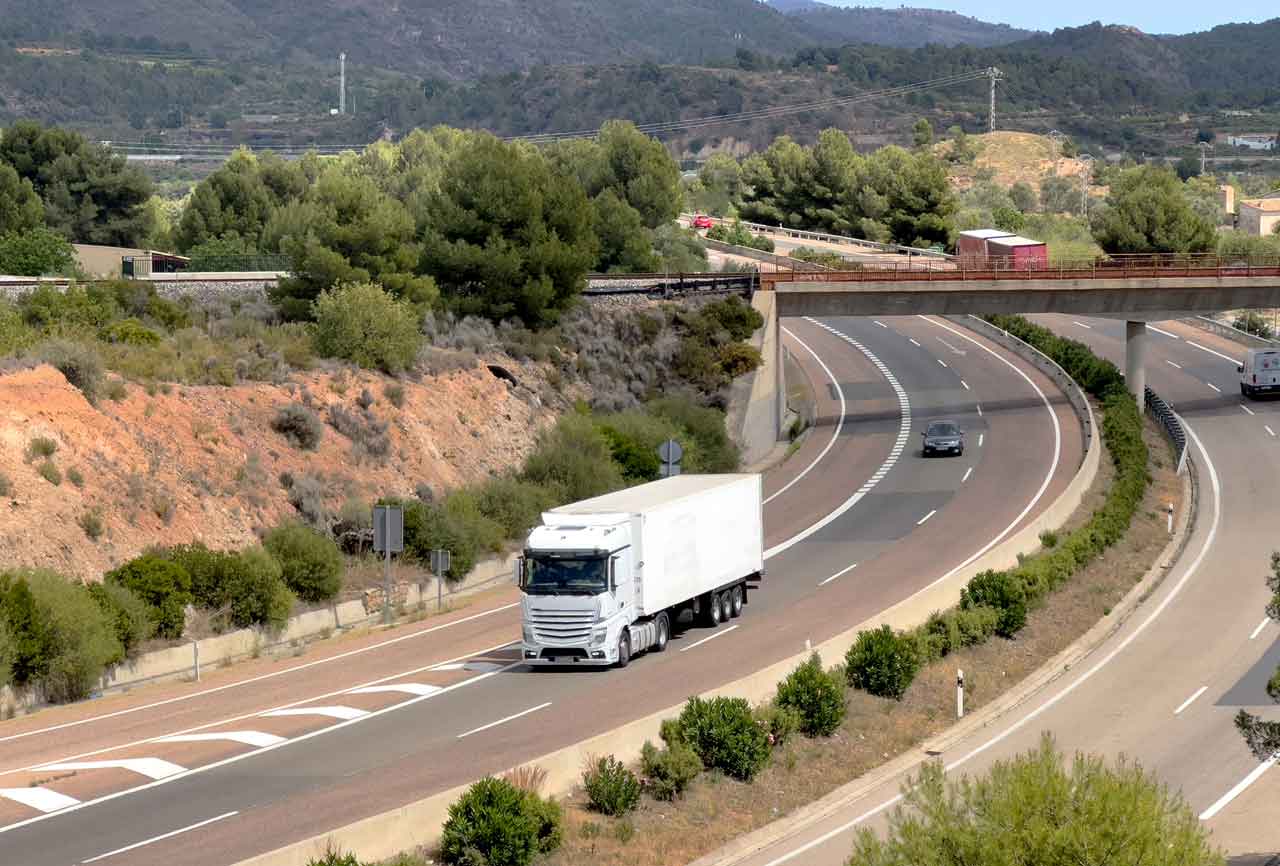
As of 5 October 2026, Spain’s Documento electrónico de control administrativo (DeCA) is now mandatory for relevant road freight transport operations. The new digital requirement replaces the previous paper-based control document and applies to transport into and out of Spain.
Under the new requirements, the DeCA must be created and made available digitally. Documents must be generated as digital PDFs, linked to a unique URL and accessible through a QR code. The document must be available to the parties involved in the transport and can be retrieved by transport authorities during inspections. The framework also clarifies the role of electronic signatures and how DeCA relates to other digital transport documents.
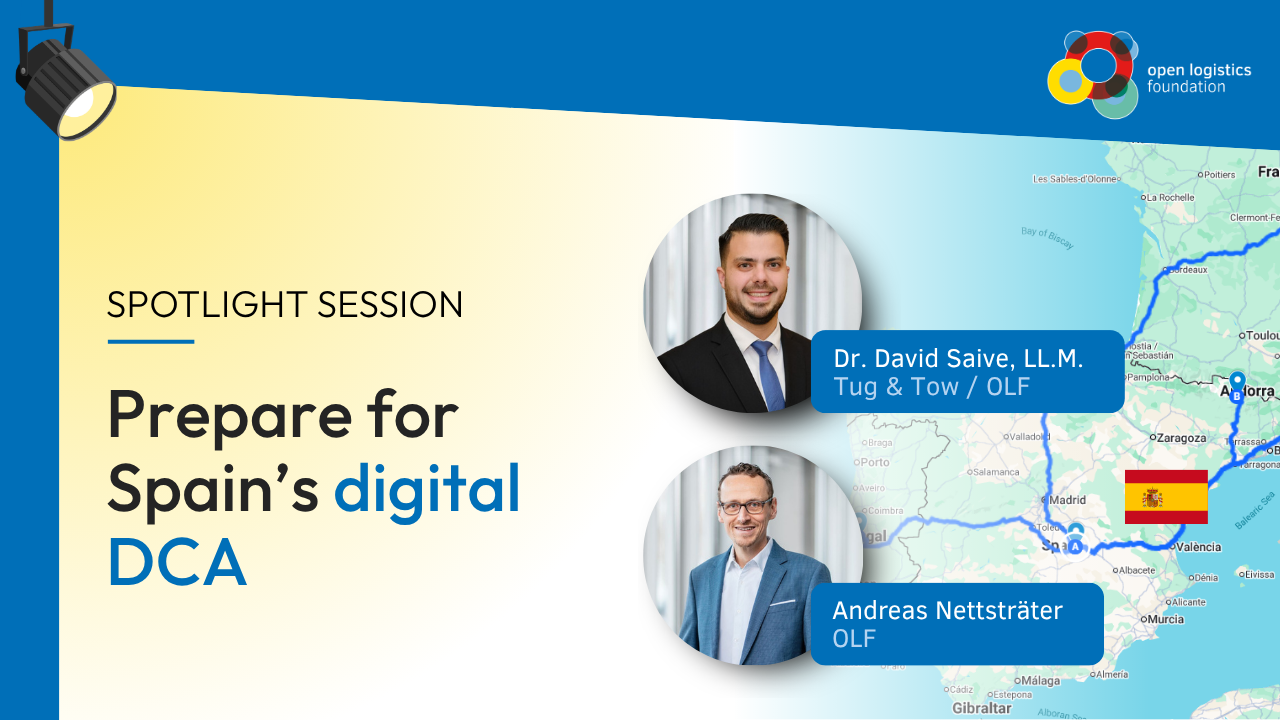
Watch Spotlight Session: Prepare for Spain’s digital DCA
Disclaimer: This session was filmed before the DeCA requirement revision. Some information may be outdated.
The DeCA requirements have evolved significantly since the framework was first drafted. Earlier versions included requirements that created practical challenges and raised questions for companies established elsewhere in the EU. In particular, carriers had to register with the Spanish authorities using a Spanish digital identity. As this is only available for Spanish companies, the previous requirement conflicted with the EU eIDAS regulation.
The logistics industry raised these concerns and, following feedback from the Open Logistics Foundation and other industry organisations, Spanish authorities revised and clarified several aspects of the requirements. The changes illustrate a broader challenge in the digitalisation of freight transport: regulations need to provide a clear legal framework while also taking into account how digital documentation works in real-world cross-border operations.
The revised DeCA framework also provides greater clarity on the relationship between DeCA and existing electronic transport documents. The rules confirm that other transport documents and software, including eCMR, can be used to fulfil the DeCA requirement without the earlier registration process and where they contain the information required under Spanish law. This is relevant for companies that are already using electronic transport documentation. Rather than treating every national requirement as a completely separate digital process, interoperable components can provide a common foundation that can be adapted to different regulatory contexts.
This is one of the principles behind the OLF-eCMR Toolbox. The Toolbox provides open source components for electronic transport documentation that can be integrated into existing IT environments and adapted to national requirements. The aim is not to create a separate system for every market, but to provide reusable building blocks that support different use cases and regulatory requirements.
The Spanish development also sits within a broader European move towards digital freight information. The eFTI Regulation (EU 2020/1056) establishes a legal European framework for the exchange of data between authorities and companies, eliminating the use of paper for this control. At the same time, individual countries can continue to introduce national requirements and approaches, as Spain has done with DeCA.
The DeCA framework already anticipates this relationship: once the eFTI framework applies, transport information provided through eFTI can be used instead of a separate DeCA. This underlines the importance of digital systems that can accommodate both national requirements and emerging European frameworks.
Questions about DeCA and eCMR?
The introduction of mandatory DeCA is another step in the digitalisation of road freight transport in Europe. As companies adapt to the new requirements, questions will naturally arise around implementation, interoperability and the relationship between DeCA, eCMR and eFTI.
The Open Logistics Foundation is happy to help clarify these relationships and explain how the open source OLF-eCMR Toolbox can be used in the context of Spain’s DeCA requirements.