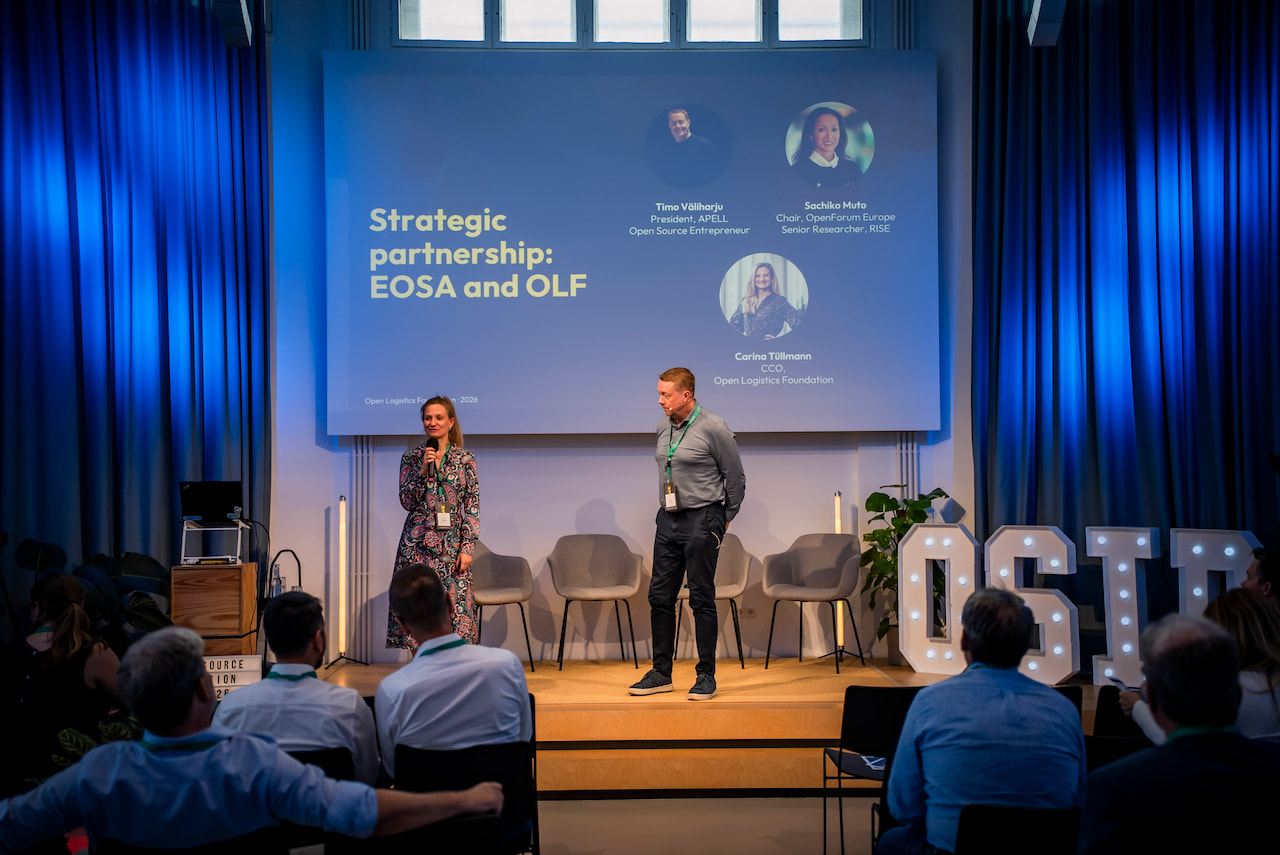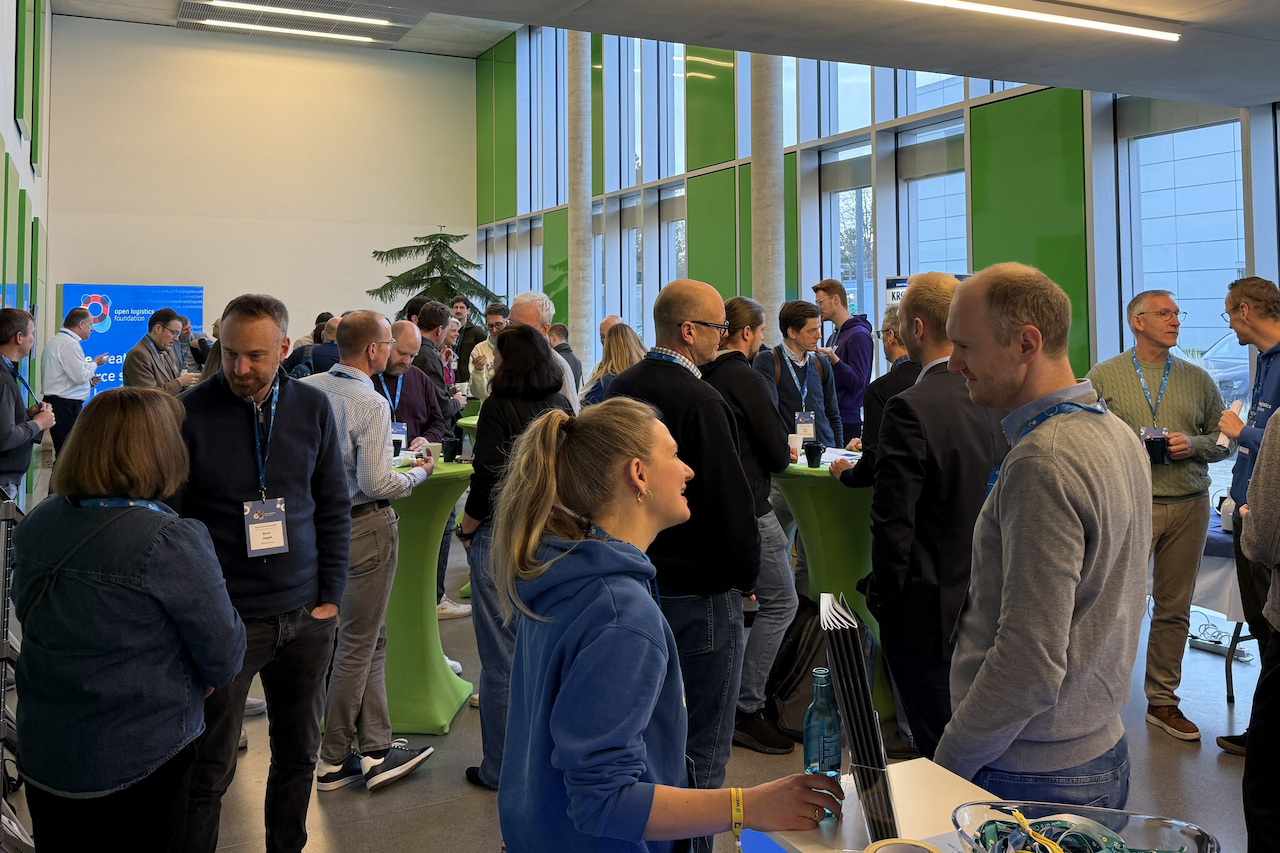
The Ideation Workshop brings representatives of OLF member companies together to explore a common question: How can open source software and shared standards help address challenges across the logistics industry? In response to this question, participants exchange perspectives on industry challenges, develop ideas and explore opportunities for solutions that benefit the wider logistics community.
The Ideation Workshop is a starting point for ideas that can develop into new Working Groups and projects, making the event a key part of the OLF’s ideation process.
More than 70 colleagues from member companies took part in the 2025 Workshop. This year’s event will take place on 3 December 2026 at Fraunhofer IML in Dortmund, Germany. Registration is now open.

Join the Open Logistics Foundation community at Ideation Workshop 2026!
Six topic clusters to guide preparations
Building on the experience of previous workshops, the OLF is introducing topic clusters ahead of this year’s event to help structure day-of discussions. The clusters are based on needs identified by OLF members and the Logistical Steering Committee (LSC).
The clusters are intentionally broad. Rather than prescribing solutions or defining project scopes in advance, they help participants identify common ground and explore where new open source projects and shared standards could create value for the industry.
During and after the Workshop, these new ideas will be considered in the context of the OLF’s Working Groups, ongoing projects, the Knowledge Circle AI in logistics and other relevant initiatives. The goal is then to build on existing work, connect complementary efforts, or initiate new projects.
Participants can use the following six clusters as a starting point for their preparations:
Artificial Intelligence (AI)
Exploring common foundations for the easy and interoperable application of AI in logistics, including shared training data, open data models and specialised models for tasks such as estimated time of arrival (ETA) forecasting and route planning.
Cluster Expert: Ulrich Buhrmann, Director Market Transport & Logistics at iteratec
Sustainability
Identifying open approaches that foster transparency and interoperability in sustainability-related processes, such as the digital mapping and standardisation of book-and-claim systems.
Cluster Expert: Kerstin Schubert, Senior Scientist at Fraunhofer IML
Automation and Robotics (Intralogistics)
Developing common interfaces and open standards that facilitate the integration of different automated systems, such as manufacturer-neutral, mixed-fleet transport management systems or the exchange of operational status and event messages.
Cluster Expert: Christian Prasse, Head of Strategic Development at Fraunhofer IML
Road
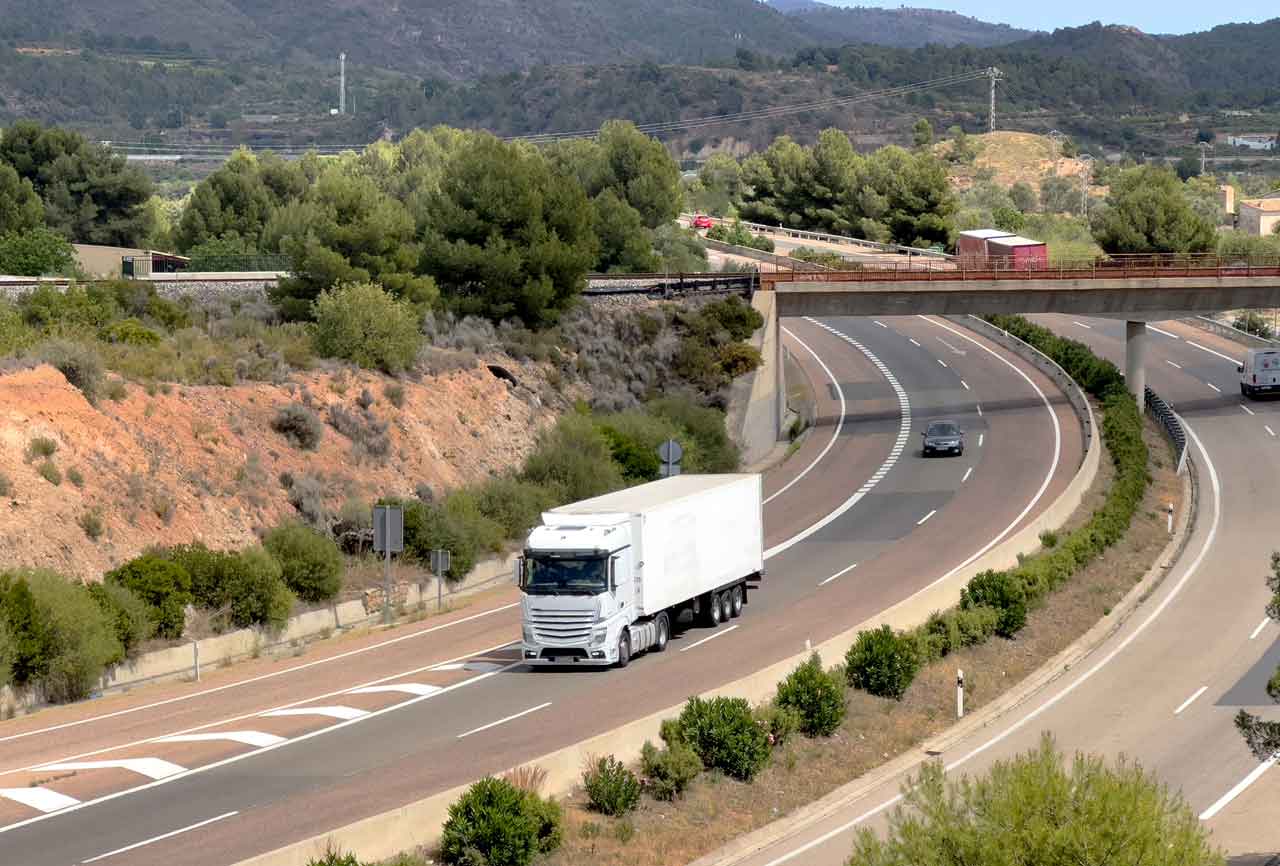
Addressing shared information and document flows in road freight transport that can be standardised, including digital transport and delivery documents, logistics status updates and the synchronisation of events across shippers, freight forwarders and carriers.
Cluster Expert: Ingo Müller, Department Head Prototyping & Testing at DACHSER
Maritime and Terminals
Improving the digital interconnectivity of ports, terminals, shipping companies and hinterland transport through harmonised data flows and standards for, for example, time slots, arrival information, container movements and transhipment processes.
Cluster Expert: Achim Klukas, Head of Department at Fraunhofer IML
Other
Providing space for cross-cutting topics that affect several areas of logistics, address new subject areas, or otherwise do not fit neatly into the other clusters. Approaches that establish common standards, data models or reference implementations are of particular interest.
Bring your challenges and ideas
The clusters are a starting point, and do not set a predefined agenda. Participants are encouraged to consider challenges from their daily work and where a collaborative open source approach could help. And if there’s anything missing from this cluster list, be sure to let us know!
As a community-driven event, the Ideation Workshop’s value lies in bringing together people with different experiences who share a common interest in advancing the digitalisation and standardisation of logistics through open source. By introducing topic clusters before the event, the OLF aims to make discussions more focused without limiting the scope of what participants can contribute. The next generation of collaborative projects in the Foundation should emerge from the needs of the community itself.
Registration for the 2026 Ideation Workshop is now open. OLF community, you can join us there!