Transparency throughout the supply chain is no longer a unique selling point. Customers today expect to be able to track a shipment’s location and its next steps in the process at any time. However, technical implementation spans a multitude of different systems that have evolved over time and developed their own terminology. This creates a problem that regularly comes to light in integration projects: different status messages often describe the same reality. What is referred to as “In delivery” in one system is called “Ready for delivery” or “Out for delivery” in another. For people, the difference is usually insignificant. For systems and interfaces, however, it is highly relevant. Every new integration requires coordination on how individual status messages are to be interpreted.
Standardised terminology for transport events
It is precisely for this reason that the Open Logistics Foundation’s Working Group Track & Trace has developed a common event model. The aim of the approximately 30 companies represented in the Working Group was to create a standardised language for transport events that works independently of companies, countries and the IT systems used. The result is 14 clearly defined transport events that map both typical processes and deviations from the standard process.
The unique approach taken by the companies that developed the model is that it is not the underlying, existing processes that are standardised, but “only” the meaning of the information exchanged. This means that whilst drivers, dispatchers and customers can continue to work with the terms and tools they are familiar with, standardisation takes place in the background.
Rhenus has now gained its first practical experience with the model in a joint pilot project with the technology company Zekju. Zekju, also a member of the Open Logistics Foundation, supports shippers, freight forwarders and drivers with digital transport communication, relying on established messaging services rather than additional driver apps. During the project, it quickly became apparent that differing status terms can also lead to additional coordination efforts in this context. It was therefore decided to use the Open Logistics Foundation’s Tracking Event Model as a common basis.
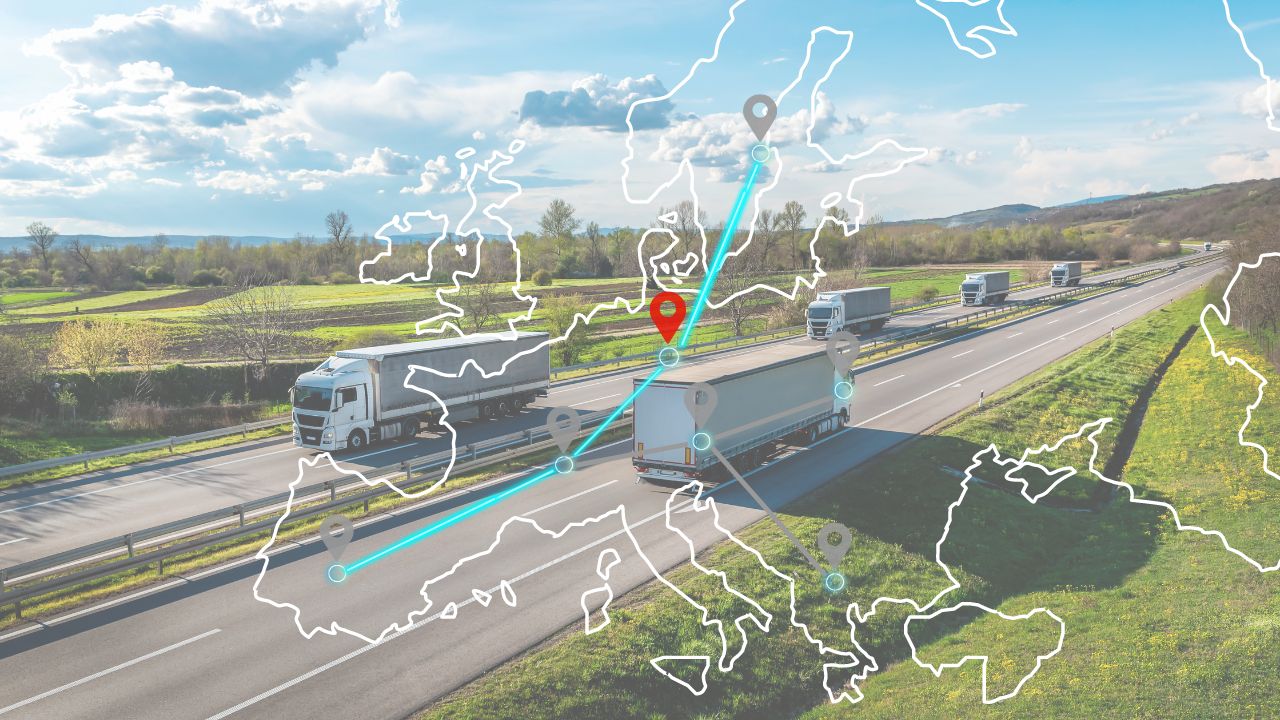
Learn more about the Tracking Event Model project.
Pilot project in direct freight transport
Rhenus launched the pilot project within its direct freight transport service, in which shipments are transported directly from the sender to the recipient without any transhipment. The pilot initially began in Poland and was subsequently extended to the Czech Republic. Rhenus handles the local dispatch, customer communication, shipment tracking, and invoicing. Transport is then carried out either using Rhenus’s own vehicles or via a network of hauliers and subcontractors. As Rhenus, in its role as a logistics service provider, needs to consolidate information from many sources, the issue of status updates is of particular interest to the company.
The technical integration proved to be relatively straightforward. The Tracking Event Model was integrated into the existing system environments, enabling unambiguous assignment of incoming and outgoing status messages to the defined events. Operational processes remained unchanged.
In total, several hundred shipments were modelled using this approach. Experience has shown that clearly defining events simplifies collaboration. When “arrival”, “departure” or “delivery” have the same meaning for all parties involved, there is less room for interpretation. This reduces the need for clarification, and new integrations can be implemented in a more structured manner.
For operational staff, very little changed. Drivers continued to report the same incidents as before. The actual standardisation took place at system level. There, different terms are mapped onto standardised events. It is precisely this invisible nature that is one of the model’s strengths. The standard comes into play where complexity arises, without unnecessarily altering existing processes.
As a result, the Tracking Event model provides Rhenus a sound basis for data exchange with customers or IT service providers, even outside traditional partner organisations. Discussions are currently underway to integrate the standard into the Rhenus Customer API. This is because the model essentially enables faster integration for both parties. The clear definition of the “shipment journey” enables significantly faster data connection. Where in the past, several lengthy meetings were sometimes required to develop a shared understanding of a status with partners and customers, this can now be clarified in a single, brief meeting.
Open standards make collaboration easier
Open standards are often perceived primarily as a technical issue. However, they are first and foremost about collaboration. The more companies that use the same event definitions, the easier it becomes to exchange data and integrate systems throughout the entire transport chain.
The real-world test has shown that a common event model not only works in theory, but can also be used under real operating conditions. Its benefits do not stem from additional functions or new user interfaces. The benefits arise when different systems speak the same language.
The best standards are often those that go largely unnoticed in everyday life. That is precisely where their strength lies. They lay the foundations for all stakeholders in the logistics sector to make collaboration simpler and more scalable.