
Logistics accounts for a significant share of a product’s overall carbon footprint. Yet, the current state of emissions data makes it hard to compare results, consolidate figures, or act on them with confidence. Road transport is particularly challenging due to its patchwork of systems and actors and domination by small operators who often lack the resources or expertise to perform rigorous carbon accounting. Air and maritime logistics are more consolidated, but they face similar challenges when emissions data must be exchanged across complex partner networks.
Decarbonising supply chains is one of the most powerful levers for corporate climate action, yet logistics continues to lag. The need for collaboration is clear, but so are the hurdles that make it hard to achieve.
The role of the Smart Freight Centre
These challenges are not new – they are the reason Smart Freight Centre (SFC) was founded in the first place in 2013: to make freight part of the climate solution and create a credible, industry-backed methodology for logistics emissions accounting in collaboration with the industry. In its early days, SFC focused on developing what became the GLEC Framework, which was first published in 2016 as an emission accounting and reporting guidance that works across transport modes (i.e. road, rail, maritime, and air) and operations (e.g., parcel and chemical operations). Today, the GLEC Framework is a globally recognised methodology for logistics emissions accounting and forms the foundation of the ISO 14083 standard, which, in turn, underpins the newly agreed CountEmissionsEU regulation, harmonising how greenhouse gas emissions from transportation are calculated.
It became clear over time that guidance alone was not enough, and the industry sought a neutral partner to help with mediation in difficult decision-making and choosing the trajectory and strategy for the industry to follow. SFC evolved accordingly to meet that need. It expanded geographically, launched new communities and programmes to support various operations, and built the Smart Freight Centre Academy to help industry professionals learn and apply methodologies in a real-world setting. But one gap remained open: how to turn a methodology into something that actually works across IT systems.
Enter iLEAP.
What is iLEAP and how does it work?
With its project partner, the SINE Foundation, Smart Freight Centre developed iLEAP as the digital counterpart to the GLEC Framework. SINE Foundation complements SFC’s expertise in developing methodologies with pioneering work in carbon transparency and solving data dilemmas. Together, they designed iLEAP as a structured digital protocol that can be implemented directly in company systems.
Before iLEAP, companies interpreted the GLEC Framework in their own way within their IT systems. Different naming conventions, units, hierarchies, and conversions were common, which made software integration and data exchange complex and error-prone. iLEAP addresses this by standardising how emissions data is recorded, structured, and exchanged. The result is a clear digital protocol that ensures reproducibility, and consistency and interoperability across software solutions.
The protocol aligns with ISO 14083, which was recognised by the European Commission in 2023 as the reference standard for logistics emissions. While ISO14083, as a normative document, provides a static reference for regulators, the GLEC Framework is more practical, continuously updated, and easier to digest for analysts and logistics professionals. Even with a standardised methodology, though, there is no universal approach for exchanging emissions data digitally. iLEAP fills that gap, facilitating both business-to-business (B2B) and business-to-government (B2G) data exchange.
Its vision is to become the standardised way for companies to share emissions data with each other, their partners, and authorities. By offering a neutral, open source solution, iLEAP bridges the gap between methodological standards and practical IT implementation, supporting the wider adoption of consistent and reliable emissions reporting
Visit the protocol page and read the whitepaper to learn more about iLEAP.
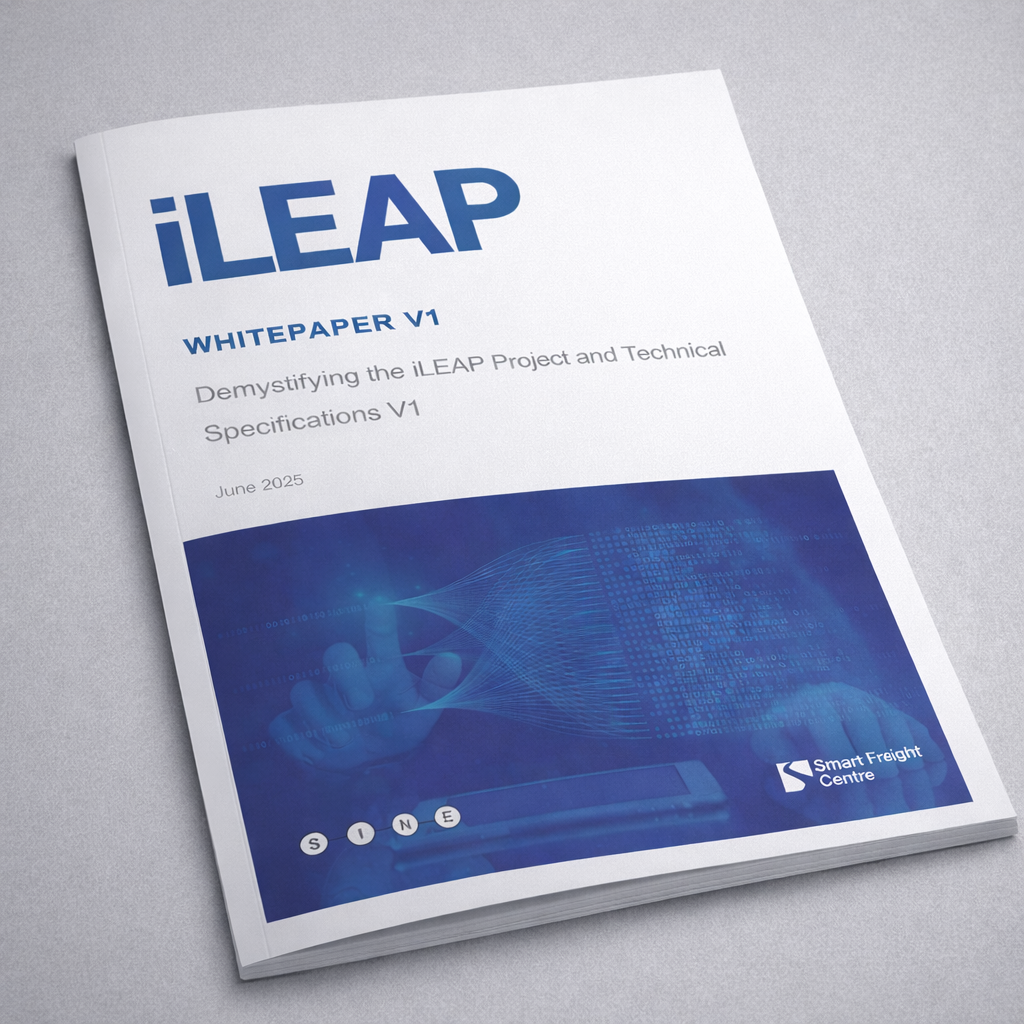
Technical specifications
iLEAP’s technical specifications define the emissions nomenclature that should be translated into software. By clearly describing data structures and exchange rules, the protocol reduces ambiguity for software providers and accelerates adoption across platforms. This helps close the gap between methodology documents and what systems actually measure and exchange.
Open source development
A central principle of iLEAP is its development as open source. Just as the GLEC Framework is a public good, freely accessible to all, iLEAP was designed to be open to ensure that no barriers impede adoption. Developing the protocol as open source allows companies of all sizes to participate in developing it and then adapting it, creating a peer-to-peer ecosystem for logistics emissions accounting.
The Open Logistics Foundation’s (OLF) Working Group Enabling Logistics Decarbonisation uses this open source approach in its Emissions Data Exchange project. Its ongoing pilot projects provide real-world feedback to SFC and SINE Foundation, directly influencing the evolution of iLEAP.
iLEAP’s added value in emissions reporting
iLEAP improves transparency, efficiency, and compliance in logistics emissions reporting. Through it, emissions values become traceable across the supply chain, even when a shipment passes through multiple companies. This directly supports compliant reporting under regulatory frameworks such as the Corporate Sustainability Reporting Directive (CSRD). In addition, iLEAP also enhances companies’ operational efficiency and in-company decision-making. Carbon metrics are closely linked to operational data like fuel use and routing. By optimising these systems, companies can turn emissions reporting into a management tool, rather than a regulatory burden.
Integration of iLEAP generally involves identifying relevant data sources, bringing them into the iLEAP protocol, and validating outputs against the GLEC methodology. Here’s an example of a practical use case:
- A transport service provider shares verified shipment-level emission data with a shipper, i.e. a manufacturing company.
- The manufacturer automatically collects and consolidates emissions data across logistics partners that use iLEAP.
- The manufacturing company reports supplier-provided figures to customers or authorities.
Early feedback from pilots since the launch of iLEAP V1 on 17 June 2025 shows real benefits. Developers report fewer misunderstandings around units, variable names, technical structures, and data hierarchies. Implementations are easier to debug and validate, and the practical application of GLEC and ISO 14083 becomes clearer.
The open source nature of the protocol also encourages innovation. Developers can build new tools, services, or business models on top of the shared, trusted foundation. Plus, the introduction of diverse stakeholders to the feedback process ensures that emissions data remains comparable and reliable across the transport chain.
Collaboration: Enhancing iLEAP’s development
iLEAP’s evolution is driven by collaboration thanks to its open source design. While SFC and the SINE Foundation defined the initial standard, its maturation now depends on the iLEAP Community.
Through regular meetings and workshops, companies – including members of the OLF’s Working Group ELD – contribute insights ranging from methodological interpretation to hands-on software implementation. This continuous feedback loop allows iLEAP to evolve without losing coherence.
OLF plays a key role here by providing a neutral collaboration space where members can test the protocol and ensure its relevance across the industry. Freight forwarders, logistics service providers, and technology providers jointly improve the standard by piloting the protocol and sharing their feedback along the way.

Learn more about the Working Group Enabling Logistics Decarbonisation (ELD).
ILEAP has found that participants in early pilots are willing to engage deeply in its development. They are privy to a continuous feedback loop where companies can share experiences and even report on the software engineering “nitty-gritty” details. Challenges such as data quality and vehicle identification across IT systems have surfaced so far, and iLEAP is reliant on early implementers to understand where changes are needed and how the industry envisions the solution.
This iterative process, which brings multiple actors and interpretations into the open for a collaborative solution, is what makes a shared standard possible. Combined with OLF’s facilitation and SINE’s technical expertise, iLEAP demonstrates how open collaboration can accelerate reliable emissions reporting standards for logistics.
Looking ahead
The iLEAP project’s priority is industry acceptance. That means close collaboration with logistics companies and software providers to ensure iLEAP fits real operational needs. At the same time, SFC, SINE Foundation and partners maintain dialogue with public authorities interested in decarbonising logistics, as public policy and corporate action are so often intertwined.
Next steps also include growing the iLEAP community, refining the protocol based on pilot feedback, and ensuring it remains fit for purpose across transport modes and operational contexts. Companies that engage early can help shape the standard while also preparing for future regulatory requirements and saving resources. In this way, they can position themselves at the forefront of decarbonisation and standardisation.
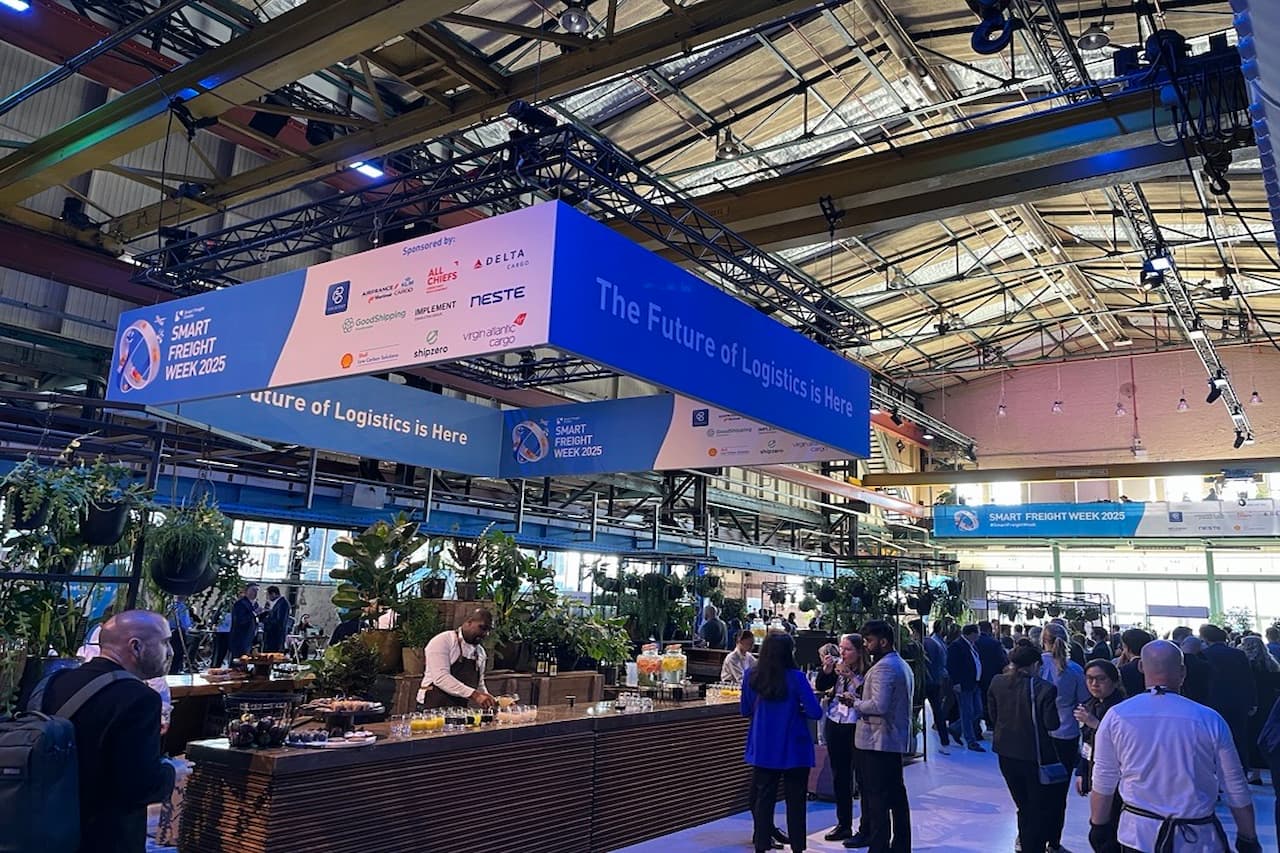
Learn more about Smart Freight Week 2026.
Regardless of a company’s current state in emissions reporting or digitalisation, providing feedback and participating in the community ensures that iLEAP evolves in ways that benefit all participants. Engaging now allows stakeholders to help shape a protocol that sits at the intersection of methodology, technology, and data exchange – and ensure it works effectively for everyone involved in day-to-day practice.